Dr George Arbuthnot
Why Didn't They Ask EvansDr George Arbuthnot is a doctor drawn into Frankie Derwent’s scheme to enter Merroway Court by staging a car accident. He supplies the medical authority that makes the deception work: after Frankie’s supposed crash, he examines her, persuades the household to let her remain, and helps conceal the plan. His brief role turns professional trust into an instrument of access, while his unease makes clear that the assistance carries a personal cost.
Identity and Introduction
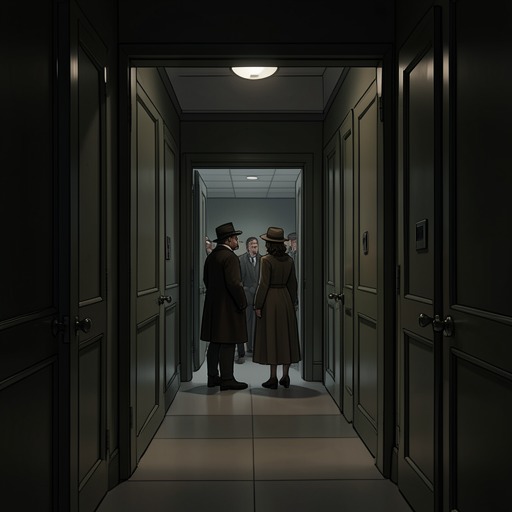
Frankie brings Dr George Arbuthnot to Bobby Jones’s garage in her Bentley, introducing him as a doctor whose help they will need. George looks gloomy, and he and Bobby exchange only faint, awkward signs of recognition. Bobby immediately questions whether the plan really requires a doctor, a response that signals his awareness of how serious the deception may become.
George is not introduced as an eager conspirator. His manner is restrained, and his later admission that he cannot explain why he agreed to help leaves his participation partly unresolved. The text gives no account of his medical background, private life, or later career; his characterization is concentrated in this choice and in the competence with which he performs his assigned part.
The Staged Accident
Frankie explains that she intends to pass herself off as a woman injured near the gates of Merroway Court, the Bassington-ffrench family home in Staverley. Since an unfamiliar visitor would attract attention in the village, she needs a credible reason to be taken into the house and kept there. George’s role is central to that solution: as a doctor apparently passing the scene, he is to take charge, examine her, and declare that she should not be moved for several days.
The plan depends less on elaborate medical treatment than on the authority attached to the diagnosis. George is to overrule objections, have Frankie carried to a spare room, and make the household accept a period of enforced rest. His presence turns a manufactured emergency into an occasion for hospitality, giving Frankie a legitimate-looking reason to remain among the people she wants to observe.
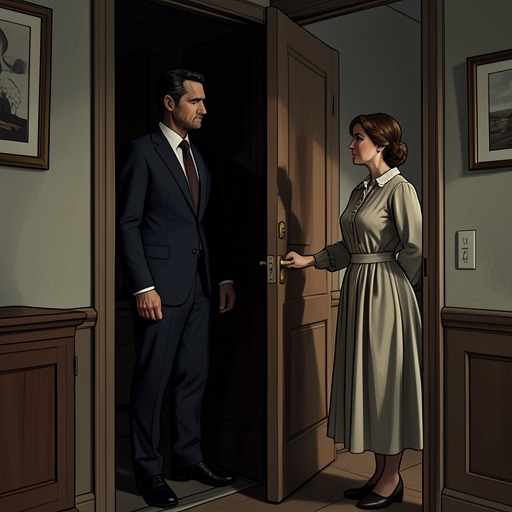
After the crash, George sustains the performance in front of Mrs Bassington-ffrench. He reports that Frankie’s concussion is slight and already passing, but recommends that she stay quietly for a day or so. When Mrs Bassington-ffrench asks whether another doctor should examine her and whether her family should be told, George says he will handle the arrangements. He then supplies the explanation that Frankie is a Christian Scientist who does not want doctors, making the absence of further medical oversight part of the story rather than a gap in it.
Complicity and Professional Risk
George’s role is not merely to appear at the scene: he performs an examination, delivers a reassuring but useful verdict, and manages the household’s questions. He even returns to the bedroom on the pretext of having left an instrument there. The episode shows how small acts of professional procedure—the examination, the recommendation to rest, the promise to take care of arrangements—combine to sustain the false account.
In a private exchange with Frankie, George asks whether the deception could ruin his career or result in his being struck off the medical register. Frankie reassures him that she will not let him down, but his question establishes that he understands the professional danger. He nevertheless continues: he times the examination, waits for the agreed moment to end it, and says he will arrange for the damaged car to be cleared away. His involvement is thus both deliberate and reluctant, not an innocent mistake about what is happening.
The contrast between the performance and George’s private response gives the scene its tension. In public he speaks with the confidence required to make the household comply; away from it, he is worried about the consequences and calls his own participation foolish. Frankie thanks him and wonders aloud why he did it, but he has no explanation to offer. The story leaves that uncertainty intact rather than giving him a developed motive.
Medical Authority and Narrative Role
George’s brief appearance belongs to a wider plot in which medical knowledge and the language of treatment can affect people’s safety. Dr Jasper Nicholson is presented as a doctor whose promised cures and control over morphia become entangled with Henry Bassington-ffrench’s dependence and Moira Nicholson’s fear. George is not shown to take part in those events, and the evidence does not make him a partner in Nicholson’s drug dealings. The distinction matters: George misuses medical authority for Frankie’s plan, while the later danger around Nicholson involves treatment, drugs, and coercion on a much more destructive scale.
As a character, George functions chiefly as the practical hinge between Frankie’s idea and its execution. His medical status makes the household accept a claim that would otherwise invite scrutiny, while his hesitation prevents that usefulness from seeming costless. The episode also anticipates a recurring concern of the mystery: appearances of danger and reassurance can both be manufactured, and people may rely on professional authority without knowing whose purposes it serves. George helps Frankie exploit that trust, even as his concern about his career reveals that he recognizes the boundary he has crossed.